TENONStructured Co-Latents for Compositional 3D Generation

Westlake University
The assembly book
01MESH
Centurion Mech
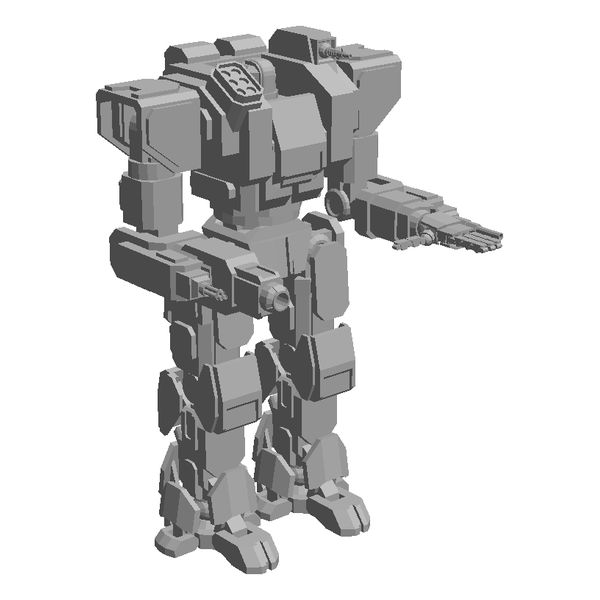
Part inventory 17 parts
ABSTRACT
Modern 3D generative models synthesize high-fidelity shapes but typically produce monolithic meshes without explicit part structure. We present TENON, which generates 3D assets with separate parts from a single image or a partial point cloud. Our method uses a structured co-latent representation that jointly encodes geometry and part membership. The decoder reconstructs geometry and predicts a continuous part embedding at each active voxel. An intra-object contrastive objective supervises the embeddings independently of how the parts are numbered. Conditional flow models learn to generate this co-latent from the input observation. Clustering the embeddings partitions the generated surface into parts, allowing the decomposition granularity to be chosen afterward without regenerating the geometry. On our two main benchmarks, our method achieves higher segmentation accuracy than the class-agnostic segmenters and generates more faithful shapes and parts from a single image than the evaluated 3D part generators.
THE METHOD
A shared representation for geometry and parts
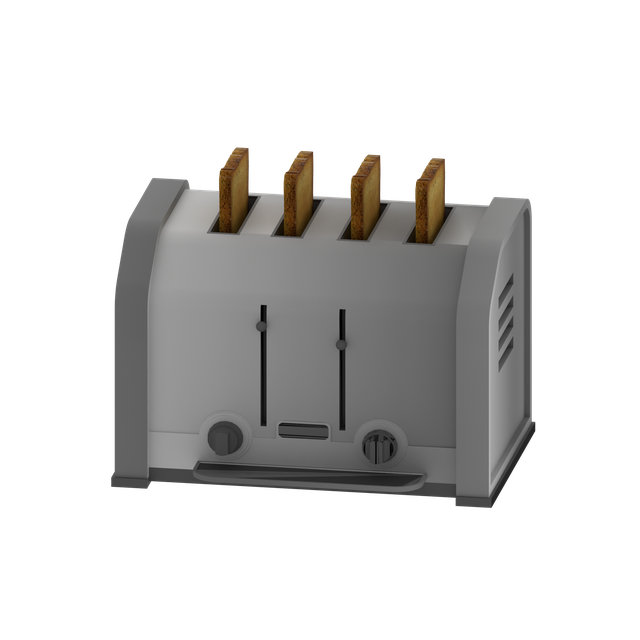
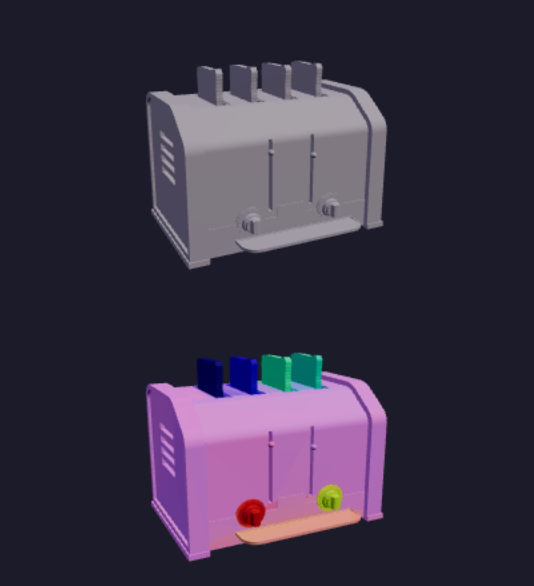
Given a single image or a partial point cloud, TENON generates a 3D surface together with part embeddings. Clustering those embeddings lets us divide the same surface into coarser or finer parts.
 Loading illustration…
 GeometryLoading illustration…
Same geometry at every K
The sparse co-latent jointly encodes geometry and part membership. Feature colors are a PCA visualization, rather than semantic part labels.
We learn the structured co-latent by extending TRELLIS.2’s shape VAE with a part-embedding head. A shared decoder reconstructs geometry and predicts a continuous membership embedding at each active voxel.
Training combines geometry reconstruction with an intra-object contrastive objective: embeddings from the same part become similar, while different parts are separated. Supervision depends on membership rather than arbitrary part numbering.
Image- or point-cloud-conditioned flow models learn to generate this representation. Spatially constrained Ward clustering extracts parts after decoding, so the same geometry and embeddings support coarser or finer decompositions without regenerating the shape.
THE BENCHMARKS
Segmentation and generation results
Evaluate part structure on existing meshes, then compare complete assets generated from the same image. Explore the scores and watch synchronized comparisons.
Full result tables
All settings and datasets for this task. Bold marks the best result; an underline marks second best. Tables and CSV contain the full task, independently of the chart filters.
Qualitative comparisons
PARTS IN ACTION
From partial scans to interaction.
Complete, decomposable assets generated from partial point clouds, brought into MuJoCo. Watch a mobile manipulator lift lids, open doors, and pull out a drawer.
The generated assets
Recorded MuJoCo simulation with textured surfaces. The inset shows the active object’s input point cloud. Joints, masses, and collision hulls are supplied during simulation setup; the robot follows scripted motions. The generated components move through contact or suction at passive joints. Geometry and parts use the partial point cloud; a separate RGB-conditioned TRELLIS.2 pass supplies appearance.